
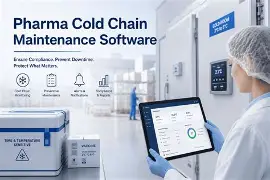
For food, pharmaceutical and other temperature-sensitive products, storage conditions directly affect quality and safety. Yet many sites still rely on staff writing down readings a few times a day.
The Business Problem
Paper temperature logs give only a few snapshots per day. Everything that happens in between is invisible.
- Overnight and weekend problems go unnoticed until the next check
- Nobody is warned when a cooling unit fails or a door is left open
- Entries can be missed, late or hard to read
- Preparing records for customer and regulatory audits takes time and effort
A single undetected cooling failure can mean discarded stock, customer claims and compliance findings.
Practical Explanation
How automatic monitoring works
Wireless sensors placed in cold rooms, freezers and storage areas record temperature and often humidity at regular intervals. A gateway sends the readings to a cloud platform, where they are stored and displayed. When a reading goes outside the limits you set, the platform alerts the right people by SMS, email or app.
Records that are ready for audits
Because every reading is stored automatically, you can produce reports for any period in a few clicks. Complete digital records make conversations with auditors and customers much easier.
Implementation Considerations
- Sensor placement: conditions vary near doors, cooling units and at different rack heights, so map each area before installing
- Meaningful alerts: use short delays so a briefly opened door does not trigger an alarm
- Escalation: if the first person does not respond, notify someone else automatically
- Calibration: use calibrated sensors and plan periodic recalibration to keep records valid
- Connectivity: choose Wi-Fi, Ethernet or cellular gateways based on coverage in cold rooms
Industry Examples
- Pharmaceutical warehousing: continuous records support documented storage conditions for medicines
- Food distribution: alerts for open cold-room doors prevent stock losses during busy shifts
- Restaurants and central kitchens: automatic logs replace daily paper checklists across multiple sites
Frequently Asked Questions
How many temperature sensors does a cold room need?
It depends on the room size and layout. Sensors are usually placed near doors, cooling units and at different rack heights, and a short mapping exercise confirms the right number.
Will we get false alarms every time a door opens?
Not if alerts are set up well. Short delays mean a briefly opened door does not trigger an alarm, while a door left open or a real cooling failure still does.
Are automatic records accepted for audits?
Digital records from calibrated sensors are widely used for quality and compliance purposes. Check the specific requirements of your customers and regulators, and keep calibration records up to date.