
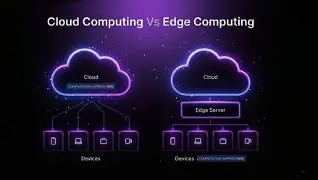
When a factory starts collecting machine and sensor data, one of the first design questions is where that data should be processed. Should it go straight to the cloud, or be handled by an edge gateway on site? Most successful IoT systems use both. The trick is giving each the right job.
The Business Problem
Sending every raw reading straight to the cloud sounds simple, but it creates real problems on the factory floor. Internet connections in industrial buildings are not always reliable, and a lost connection can mean lost data or alarms that never arrive.
- Time-critical actions, such as stopping a pump on high pressure, cannot wait for a round trip to the cloud
- High-frequency data such as vibration readings can consume large amounts of bandwidth
- Connecting machines directly to the internet increases security risk
On the other hand, keeping everything on site makes it hard to compare lines and sites, share dashboards with management or keep long-term history.
Practical Explanation
What the edge does best
An edge gateway sits close to your machines and sensors. Because it is on site, it can react in milliseconds and keep working even if the internet connection drops. Typical edge tasks include:
- Reading data from PLCs and sensors over industrial protocols such as OPC UA and Modbus
- Filtering and compressing raw data before it is sent anywhere
- Running time-critical rules locally
- Buffering readings during network outages and uploading them later
What the cloud does best
The cloud is where data from many machines, lines and sites comes together. It offers storage, computing power and access from anywhere, which makes it ideal for long-term history, dashboards, reports, analytics across sites and connections to business systems such as ERP.
A simple rule of thumb
If a decision must happen immediately or must keep working without the internet, put it at the edge. If it benefits from more data, more history or more people seeing it, put it in the cloud.
Implementation Considerations
- Network: check coverage and reliability at each location, and choose Ethernet, Wi-Fi or cellular gateways accordingly
- Offline behaviour: decide which rules must run locally and how much data the gateway should buffer
- Security: encrypt data in transit, use secure device credentials and limit access by user role. Ideally only the gateway talks to the cloud, keeping machines off the public internet
- Data volume: send summaries or events for high-frequency signals instead of every raw sample
- Scalability: standardise how gateways are configured so adding new machines or sites is repeatable
Industry Examples
- Cold storage: the gateway raises a local alarm the moment a cold room exceeds its limit, while the cloud stores the full temperature history for audits
- Machining: vibration data is analysed at the edge, and only health scores and alerts are sent to the cloud dashboard
- Multi-site manufacturing: each plant has its own gateways, and the cloud compares energy use and OEE across all sites
Frequently Asked Questions
Do I need an edge gateway if I already use a cloud platform?
In most factories, yes. The gateway reads data from machines over industrial protocols, keeps working during internet outages and keeps your machines off the public internet. The cloud then handles history, dashboards and reporting.
What happens to data if the internet connection drops?
A well-configured edge gateway stores readings locally and uploads them once the connection returns, and local rules such as alarms continue to run in the meantime.
Can we keep all data on site instead of using the cloud?
Yes. Data can be stored and displayed on a local server if your policies require it. You lose some convenience, such as easy remote access and multi-site comparisons, so it is worth weighing both options.