
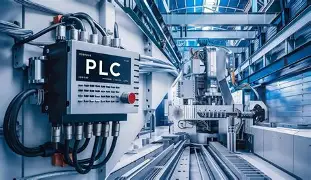
Many factories run a mix of new and older equipment. Newer machines often have network ports and modern controllers, while older ones may have no connectivity at all. The good news is that you rarely need to replace a machine to get useful data from it.
The Business Problem
Older machines often still run reliably and have years of useful life left, but they are invisible to modern dashboards. That creates gaps:
- Performance and OEE can only be measured on newer machines
- Downtime on older equipment is recorded by hand, if at all
- Each machine brand has its own software, so there is no single view of the shop floor
Replacing machines just to get data is expensive and rarely justified.
Practical Explanation
Start with the questions you want answered
For most factories, a few signals answer the biggest questions: Is the machine running? How many cycles has it completed? Is it in alarm? How much energy is it using?
Option 1: Read the existing controller
If the machine has a PLC, it may already hold the data you need. Depending on the model, data can often be read over protocols such as Modbus or OPC UA, sometimes with an add-on communication module. Reading data does not change the machine's program.
Option 2: Add simple signals
Where the controller cannot be read, small IoT modules can pick up existing signals, such as stack light status, a cycle-complete signal or a run contact.
Option 3: Add external sensors
Clamp-on current sensors show whether a motor is running and how much power it uses. Vibration and temperature sensors add condition monitoring. None of these require changes to the machine itself.
Implementation Considerations
- Audit your machines: list each machine, its controller and the signals available
- Keep it non-intrusive: favour read-only connections and external sensors to avoid affecting production
- Standardise data: map signals from different brands to the same names, so dashboards treat every machine alike
- Use an edge gateway: collect data from all three approaches in one place on site
- Plan for safety and warranty: involve your maintenance team and, where needed, the machine supplier
Industry Examples
- Metal fabrication: stack light signals from older presses give running status and downtime alongside newer CNC machines
- Plastics: current sensors on older injection moulding machines measure cycles and energy use without touching the controller
- Textiles: run contacts on looms feed a shared OEE dashboard covering machines from several decades
Frequently Asked Questions
Will connecting an older machine affect how it runs?
Not when done correctly. Read-only connections and external sensors collect data without changing the machine's program or control logic.
What if the machine has no PLC at all?
Data can still be captured from simple signals such as stack lights or run contacts, or with external sensors such as clamp-on current, vibration and temperature sensors.
Can older and newer machines appear on the same dashboard?
Yes. An edge gateway collects data from all machines and standardises the signals, so every machine shows the same status, OEE and downtime information regardless of age or brand.