
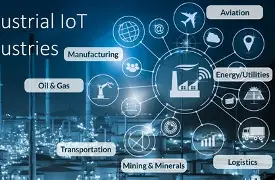
The Industrial Internet of Things (IIoT) means connecting machines, sensors and equipment so they can share data. For manufacturers, it turns the factory floor from something you check by walking around into something you can see and manage in real time.
The Business Problem
Many factories still run on information that is late, manual or incomplete. Supervisors walk the floor to find out what is happening, data is collected on paper and entered later, and problems are discovered after they have already cost money.
- Machine performance is unclear until the end of the shift
- Breakdowns arrive without warning
- Stock and materials are hard to locate
- Decisions rely on experience rather than data
Practical Explanation
The building blocks
- Devices and sensors that measure temperature, vibration, location or machine status
- Connectivity that moves data through wired networks, Wi-Fi, cellular or low-power radio
- Edge gateways that collect and process data close to the machines
- A platform, often in the cloud, that stores data and shows it in dashboards and reports
- Rules and integrations that turn data into actions, such as alerts or updates to your ERP
What it is used for
Common factory applications include monitoring machine performance and OEE, predicting maintenance needs, tracking materials and assets with RFID, barcodes or BLE, monitoring storage conditions, and automating processes such as gates or workstation checks.
Implementation Considerations
- Start with a problem: pick one clear issue with a measurable cost, such as downtime or inventory errors
- Pilot first: run a small project on one line, room or area before scaling up
- Work with existing equipment: retrofit sensors and connect current PLCs rather than replacing machines
- Plan integration: decide early which business systems, such as ERP or MES, should receive the data
- Security and ownership: agree who can access the data and how devices are secured
Industry Examples
- Automotive parts: live OEE dashboards show which lines are falling behind during the shift
- Pharmaceuticals: temperature monitoring and batch tracking support quality and compliance
- Warehousing: RFID and BLE tracking give real-time visibility of stock and equipment
Frequently Asked Questions
What is the difference between IoT and Industrial IoT?
IoT covers all connected devices, from smart homes to wearables. Industrial IoT focuses on factories, utilities and logistics, where reliability, industrial protocols and integration with production systems matter most.
Do we need to replace our machines to start?
No. Most projects connect existing PLCs and add sensors to current equipment, so you can start without replacing machines.
How long does a first IoT project take?
A focused pilot on one line, room or area can often be running within weeks, depending on its scope. Starting small lets you prove value before scaling up.